Wednesday, September 24, 2014

Response to The Hobbit

I liked The Hobbit by J.R.R. Tolkien SO much more than I thought I would! In the past, I'd had bad experiences with Hobbit-related things, so I had really low expectations for the book. For example, when I was in elementary school, I tried reading it because my dad told me he thought I'd like it... I found it really boring though, and I never finished it. Then, when The Lord of the Rings movies came out, I tried watching those and also found them even more boring. Then the two Hobbit movies were released. I watched the second one, The Desolation of Smaug, with my dad, and I still found it super boring. However, it was available as an audiobook, and I figured it would be easier to listen to the book than actually read it because then I could listen to it while I worked on menial tasks and kill two birds with one stone. So I decided to give it a try. I was really glad I did because I loved this book! I wouldn't say it's in the top five books of all time, but it was really good. The vibe of this book seemed completely different from the second Hobbit movie. This book was adventurous and had a good vibe of camaraderie. The movie was really lacking the heart that the book had. I've never read the Lord of the Rings books, but I saw parts of the movies, and The Desolation of Smaug movie reminded me too much of the LOTR movies...in a bad way, because they were super drawn out with boring characters who lacked personality. I think they did this on purpose to make the story more manly so that they could appeal to people who like manly action movies, which is tons of people. Like maybe if the movie had too much cutesiness it would only appeal to really dorky fantasy reading people. But I would have liked it better this way! I kept falling asleep during the movie. The book was super interesting! The only part of the movie that I liked was the barrel scene, even though it was really different from the barrel scene in the book, which wasn't crazy and action-packed like it was in the movie. I found a fun video about how they made the scene, if you're interested. It looks like the most fun scene to film ever:

Anyway, like I said, the parts of The Hobbit that appealed to me, and the parts of The Hobbit that appealed to the movie director were completely different I guess. For me, I really liked the parts with the character interactions and descriptions of their feelings and personalities. I loved the descriptions of Bilbo. He was adorably polite, like in the very beginning when people kept coming into his house, and he would serve them food and drinks and try to be really polite, while in his head he was worrying that he would run out of food. He ended up serving them the little cakes that he had been planning on eating later that day for lunch. Little details like that were my favorite parts of the book. 

To me, the funniest part of the book was in Chapter 7, when Gandalf, Bilbo, and the dwarves went to Beorn's house, but they didn't want to upset Beorn with all the people, so Gandalf told the dwarves to enter two at a time, every five minutes, and say something along the lines of "We are pleased to be of service to you." But it ended up not really working out that well and just being really awkward. I didn't describe it in a funny way, but in the book it was super funny! 

On many occasions, Tolkien did that thing where he kind of breaks the fourth wall and says something like, "But that's another story that we won't talk about here." I remember at one point, there was a chapter that ended with something like, "But then the hobbit realized... this part of his story had to continue in the next chapter!" I thought these things were cute. I had seen them a lot in other books, but the other books I saw it in were more recent, so it made me wonder if Tolkien was the first to do this or if he had just seen it in other books too and decided to adopt it. 

I'm sure that people already know about this and are tired of hearing about it, but I guess I may as well bring up the fact that this book is strongly reminiscent of the hero's journey. There are tons of stories that have it (e.g. Harry Potter and The Lion King), but it seemed to be even stronger in this book. I didn't mind this. It's not a boring plot structure and the actual events and characters were original. It kind of reminded me of The Lego Movie because Emmett was like Bilbo in some ways. They were really simple people who weren't particularly strong or amazing but still lovable because it made it easier for us commonfolk to relate to them.

In conclusion, this book had such a good vibe to it that the movie was totally lacking. It gave me a similar mood to the mood that I get around Christmastime, or when I go on the (now gone!!) Maelstrom ride at Disneyworld, or when I watch Labyrinth, or read the first few Harry Potter books. It made me feel like baking cookies and bread, and watching claymation movies, and building blanket forts, and going out to enjoy nature. I'm pretty sure this is really different from how a lot of people feel when they read the book, considering the nature of the movies. Maybe I should give the animated movie a try!

I think this scene would have been even better with this song!

Friday, September 19, 2014

The Witches in Aunt Maria

Aunt Maria by Diana Wynne Jones was a pretty interesting book. As I was reading it, I could totally see it being made into movies. The first half of the book felt like it could be a Miyazaki movie. It had all the Miyazaki trademarks: wind, cats, kids, old people, beige houses by the ocean, goblin-reminiscent forests, spirits, shopkeepers, people saying "Good afternoon!", and a wolf, particularly one that was originally a human but then turned into its animal state. It had a mixture of parts that were calm, thrilling, mysterious, supernatural, and quirky. To me, the writing style was reminiscent of the early Harry Potter books. It was kind of children's book-ish and whimsical, but still exciting. Towards the end of the book, the pace of the story picked up and it got weirder. It wasn't until almost halfway through the book that we found out Aunt Maria was a witch. It was here where things got a bit suspenseful, because Mig knew that Aunt Maria had turned Chris into a wolf, but she wasn't supposed to know, and if Aunt Maria realized that Mig knew, Mig would probably receive an equally bad fate and then she wouldn't be able to help herself or anyone else. While the first half of the book felt like a Miyazaki movie, the second half felt like it could be a Laika movie. It dealt with the supernatural a lot and had a wide cast of peculiar characters and circumstances, with an epic, mostly-happy ending. I really liked this book overall; I liked the tone of the story and the diction of the writer. It felt a bit nostalgic and innocent, like a breath of fresh air. I think I remember getting this feeling from Diana's book Howl's Moving Castle, although I read it so long ago that I don't totally remember. I guess from the diction of the writing, I got the sense that the author cared a lot about the feelings and processes that Mig went through, and that made me care too.

The witches in Aunt Maria weren't exactly straight-up witch stereotypes, but I did feel like I'd seen similar characters in the past. One that came to mind was Dolores Umbridge from the Harry Potter series. Like Aunt Maria and the Mrs. Urs, she was bitchy despite appearing to be a sweet old lady at a distant first glance. She would shroud herself in pink and cuteness, which seem like something a helpless, nice little old lady would do, but she had a power complex and was sometimes cruel. Aunt Maria was very similar in this way. She didn't seem to be strongly guided by morals. She mostly just bossed people around and bothered them. For example, even though she was capable of buttoning her corset, she made other people do it for her. She also made Mig's mother buy and cook food for her. When Mig's mother bought a cake instead of making one herself, Aunt Maria was really mean and snotty about it. The other Mrs. Urs were too, to varying degrees. From the start, one could see that Aunt Maria was mean and frumpy and lazy and obnoxious. However, she seemed more like a stereotypical old lady with dementia than a stereotypical witch who is thin and warty with a black hat. She would often invite a group of friends over for tea and dessert, and her friends were pretty similar, some nicer, some meaner, and some crazier and some saner, but all were kind of similar. Elaine was the meanest one, and came over the most frequently. As the story went on, it turned out that Aunt Maria had more power than we knew about originally. On page 72, Aunt Maria turned Chris into a wolf because he was badmouthing her and accusing her of murder. This was the first time that Aunt Maria actually showed her magic, and it was revealed that all her friends could also do magic. They weren't like stereotypical witches who were constantly doing magic in their day to day lives. It seemed like something that was only done out of necessity, and generally was kind of a weird roundabout way of solving the problem. I wasn't quite sure, for example, why Aunt Maria made it impossible for Mig's mother to realize that Chris hadn't been home, but she didn't make it impossible for Mig to realize. Either she was really smart and knew that even if Mig did notice, she wouldn't be able to do anything about it, or Aunt Maria was just being her weird self. I guess the biggest non-stereotypical thing is that generally there's not a group of crazy old stuffy ladies running a town.

Favorite quotes:

"Oh dear. I think Hester Bayley may be as dotty as Zoe Green
underneath. Or she doesn’t know better. Mostly the pictures were
of fairies, little flittery ones, or sweet-faced maidens in bonnets, but
there were some that were so queer and peculiar that they did
things to my stomach. There was a street of people who looked as if
their faces had melted, and two at least of woodlands, where the
trees seemed to have leering faces and nightmare, twiggy hands.
And there was one called ‘A naughty little girl is punished’ that was
worst of all. It was all dark except for the girl, so you couldn’t quite
see what was doing it to her, but her bright clear figure was being
pushed underground by something on top of her, and something
else had her long hair and was pulling her under, and there were
these black whippy things too. She looked terrified, and no wonder.
‘Charming!’ Chris said."

"Really it is difficult having a martyred crusading saint for a
mother sometimes. "

Monday, September 15, 2014

What is "Weird"?

For this week, I watched the movie The Cabin in the Woods and I read Lullaby by Chuck Palahniuk, two works that fit into the critical category of "weird."

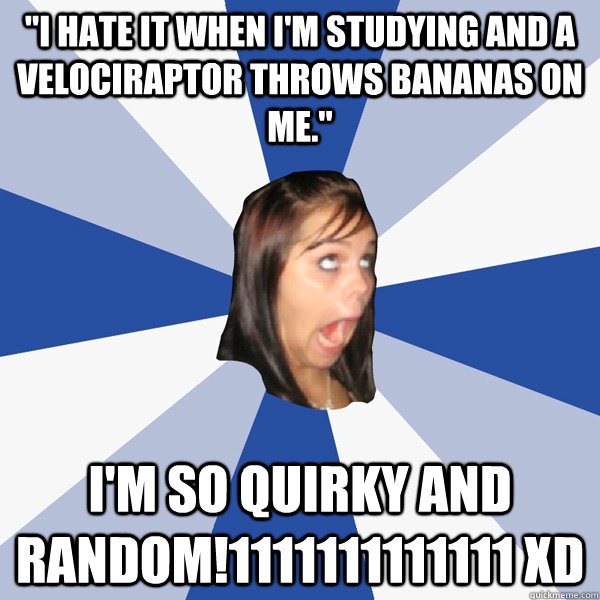
The word weird has so many different meanings, depending on who you go to. It is a word that is thrown around casually to describe people and feelings. It's become a really casual term, like the word "love." Also, like someone said in class earlier, it's become popular these days to braggingly call yourself "weird" or "quirky," kind of like how it's recently become popular to ascribe various mental illnesses to yourself. It's been in fashion lately for people to try to stand out more, but stand out in a way that's still socially acceptable. There are certain mental illnesses that people over-diagnose themselves with, and others that people shy away from. There are certain "weird" and "quirky" attributes that people will try to absorb, and others that people still have stigma toward. This has become so popular it has a meme now!

It seems like people are always trying to decide which level of clichéness they're okay with for themselves, and they judge whoever is on a lower level of clichéness. But they also judge some of the people who are on a higher level, and some of the people who are on the same level, like they feel like what they're doing is more genuine than what other people are doing. In general, though, I think this trend is nice for kids because I think it might decrease bullying a little, and nice for people in general because it makes you feel a little safer to reveal parts of yourself that you normally wouldn't.

To me, the term is something that is more of a feeling that we apply a word to than a word that can be easily described. It's easy to call something weird, and know when something is weird, and if someone else calls something weird, you can usually agree with them. I think that it's not as easy to pinpoint exactly what makes one decide that something is weird, though. Sometimes if you look at two different things that you truly believe are both weird, it can still be hard to find a connecting line between them that originally made you decide both of them are weird.

The word weird also has a dictionary definition.
1) involving or suggesting the supernatural; unearthly or uncanny:
a weird sound; weird lights.
2) fantastic; bizarre:
a weird getup.

The dictionary definition gets closer to my interpretation of the critical genre of the "new weird." I had actually never heard of this genre before my introduction to it in this class, but I think I can see what the meaning of the term encompasses. I was never sure what a book like Lullaby by Chuck Palahniuk would be classified as. I probably would have lumped The Cabin in the Woods into the horror genre, but there is definitely more to it than a normal horror movie. "New weird" makes sense as a genre for both of these works. They both take something that we've seen before, but put a spin on it that makes it really unique. Both The Cabin in the Woods and Lullaby are based in the horror genre, but they're done in a unique way.

A side fact is that in high school I was really into Chuck Palahniuk. I read Fight Club, Diary, Haunted, Survivor, Invisible Monsters, Choke and part of Pygmy (though I didn't finish it because I didn't like it). It was actually just as I was about to start reading Lullaby, which was next on my list, that my parents said, "Hmm, we see that you have been into this Chuck fellow lately. Let's see what this is about!" As you might already know, Lullaby was influenced by the brutal murder of Palahniuk's father and girlfriend. So, my parents were really disturbed by this and decided to ban me from reading any more of Chuck's books. So I finally read the book that I had initially set out to read about four years ago! Lullaby was definitely very similar in writing style to Chuck's other famous books. It had the same use of short choppy sentences and repeated phrases and lack of certain types of punctuation. One difference in the writing was that this one alternated between past and present tense. Also, this was the first horror genre story I'd read by him. Diary had supernatural elements too but this one had them more strongly. Other parts of this book reminded me of Invisible Monsters. Though I don't remember Invisible Monsters super well, I remember there was a group of weird characters who went on a sort of road trip. Lullaby also featured a weird cast going on a road trip, though their road trip had more of a purpose. They also both had nonlinear structures.

From Lullaby and The Cabin in the Woods, I think it might also be safe for me to gather that works in the "new weird" genre have their own unique, satirical tones. Lullaby's tone is witty, meticulous, and dry. The Cabin in the Woods' tone is rather tongue-in-cheek, comedic, and heavily satirical. At points in the movie, it also had a shallow tone, which was intentional. They used this shallow tone for the parts where the "gamemaker"-type people putting the movie together were working or talking or partying afterward. They were disconnected from the feelings of the people in the movie and were very business- and money-oriented. Their shallow lack of empathy added to the satire feeling of the movie because it was shown back-to-back with characters in sheer terror and confusion. It trivialized the feelings of the people in the movie-within-the-movie. It was very different from the tone of a normal horror movie.

Monday, August 25, 2014

Assumptions of Kwaidan

I was hoping to read A Wild Sheep Chase for this week, but I didn't see it in the resources, and there also wasn't a copy available in the library so I decided to read the recommended Kwaidan stories instead, since they were free...

In The Story of Mimi-Nashi-Hoichi, the first thing I noticed was how in-tune with nature the author seemed to be. He wrote about nature spiritually. He called the beach haunted, but then wrote about it in a way where I wasn't sure if it really was haunted, or if it was just meant to be a poetic metaphor. For example, he said that when the waves crashed loudly at night, it sounded like people were yelling. If this wasn't a ghost story book, I would just assume that this was a metaphor. Religion in this story has a lot of influence on spirits compared with in ghost stories in Western culture, where generally ghosts don't really care or think about religion, probably partly due to the fact that ghosts are incompatible with most of Western religion (I think..?). It seems like in this author's culture, spirits are considered more normal and commonplace. They aren't always discussed as scary or amazing, just as a part of life that happens... I don't know much about the Shinto religion, but I believe it used to be really popular in Japan and involved making shrines on roadsides and in people's yards for spirits to take shelter in. Possibly the Shinto culture is the same or similar to the culture of this author. Hoichi must be very magical if he was able to completely recover after his ears were chopped off.

There was an interesting juxtaposition on the first page of Diplomacy, where there is a chaotic scene of a man about to be executed unfolding in a peaceful Japanese garden. Again, there is a very matter-of-fact perspective about the paranormal: "If any person be killed while feeling strong resentment, the ghost of that person will be able to take vengeance upon the killer. This the samurai knew." The ending of Diplomacy was interesting, despite being oddly abrupt. It made me wonder if the ghost of the dead man ever ended up biting the stone, since it was the only desire he knew and it would be weird if he didn't act on it, in my opinion.

The writing of these stories reminds me of Aesop's Fables or some other book of simple stories that have moral lessons at the end. It's very simplistic and straightforward with the occasional bit of dry quirkiness that may or may not have been intentional. It's not usually the type of writing that I see for Western ghost stories. It's weird how the girl in Of a Mirror and a Bell is obsessed with mirrors, like she got sad that she never got her family mirror and thought about the old saying, "a mirror is the Soul of a Woman." It's kind of funny to me how random this story is. The idea of a lot of loud crazy townspeople trying to smash the bell as powerfully as they can is a fun visual image, and so is are the religious leaders who get so annoyed with the loud noises that they roll the bell down a hill into a swamp. And then they went on a random tangent about nazoraëru before getting back to the bell in the swamp. The end of this story was also super weird but in a funny way I guess. They lead up this whole time to the wealth, and then never said what it was. Am I supposed to be getting a message out of this story such as be humble or don't be greedy? The farmer guy at the end was humble and greedy. I don't understand why the spiriti revealed herself to him and no one else. This story left me scratching my head. Maybe it is assumed that I would understand this ending as a member of Japanese culture. Possibly there were symbols that a Japanese person would understand and I wouldn't.

Relationships Portrayed in Twilight

A popular topic of discussion/marvel/confusion in class today was how the Twilight saga got to be so popular. Well, here's my theory...

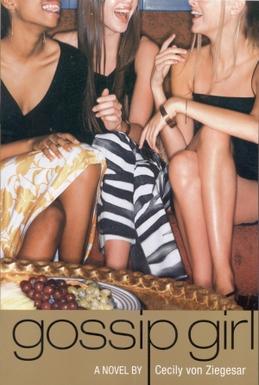
The first time I read Twilight was as an eight grader, so this would have been the year 2007, one year before the movie was released. One thing that I don't think a lot of people know about/remember from being a middle schooler in the 2000's is how bad other popular books were at this time. In comparison, Twilight was probably around a B+. These are some of the other books that were popular around this time:


Not to judge books by their covers, but you can guess from these images that the quality of popular books in middle school was probably not that high...

Another thing about this short time period was that a fun new culture was just starting to take off in middle schools across the country...


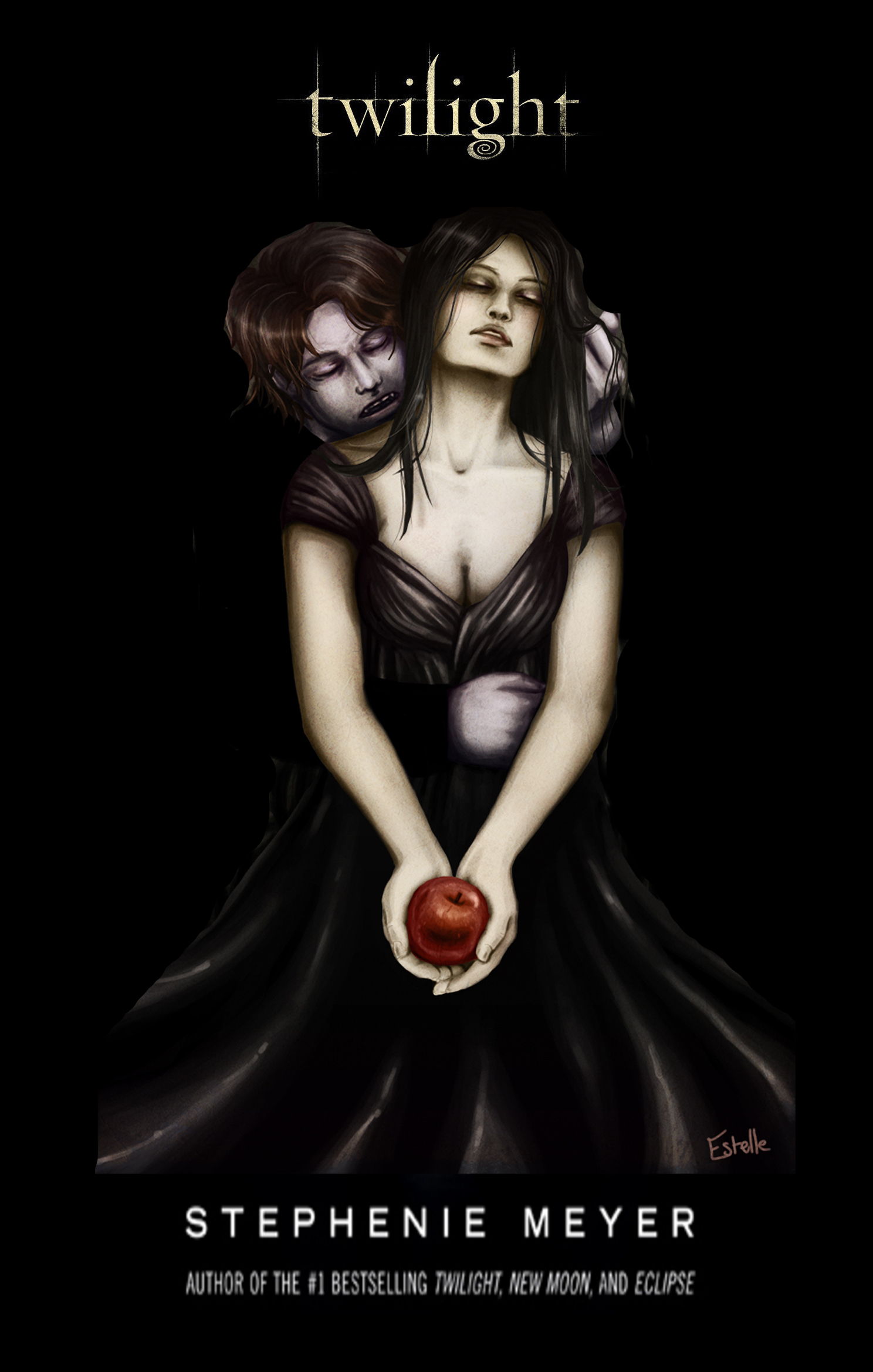
Doesn't it look like if you were going to take the traditional teenagey book and combine it with the above picture, it would look something like this? 


So that is my theory on how Twilight got really popular. People complain about the writing a lot, but if you look at other books that were popular back then, this isn't too bad. That and people liked the slightly dark twist that this book had. The cover itself was mostly black with some red and white which were popular colors. But if you ask me why all of these books (such as The Clique, Gossip Girl, etc.) were popular, then I would be at a loss... 

Anyway, now to discuss the relationships portrayed in Twilight...

The main-ish characters in this book are Bella, Charlie, Edward, Renée, Tyler, Eric, Mike, Jacob, Jessica, Carlisle, Esme, Rosalie, Alice, Jasper, Emmett, and James.

Bella's parents are Charlie and Renée. Charlie is a police officer who lives in Forks, and he is quiet and awkward but down-to-earth and generous. He buys Bella a truck to give her when she first arrives in Forks, though he doesn't have a lot of money. They share a small house that only has one bathroom and a living room the size of a handkerchief, as Bella described it. Charlie is still in love with Renée, and has pictures of her hanging in the house even though they have been divorced for many years after a very short marriage. Unlike Charlie, Renée is very outgoing and talkative. She lives in Arizona in a "lower-income neighborhood" even though the city overall is wealthy. Renée lives with a guy named Phil who plays for a minor-league baseball team. Bella appreciates Charlie's quietness even though she finds it awkward at times. It's less annoying to her than her mom's overly-talkativeness. Strangely, Bella thinks of herself as a quiet, awkward person, but to me, she seems very average in her social skills, and definitely more outgoing than Charlie. 

Bella's high school friends/acquaintances are Tyler, Eric, Mike, and Jessica (along with some other less consequential people). Eric is the first person Bella meets, and she seems a little overly-judgey of him for someone who's supposedly bad at making friends and hasn't met anyone else yet and also is supposedly down-to-earth. On their first encounter, Bella tells him a bad joke and judges him when he doesn't laugh. 

The second person Bella meets is Jessica. Jessica is a typical loud, popular high school girl. Bella is a bit overwhelmed by her but they form a decent friendship and go dress shopping and whatnot together. According to Edward, Jessica is very empty-headed... not much substance there, he says, unlike SUPER INTERESTING BELLA! 

The other two (non-vampire) boys Bella befriends in this book are Mike and Tyler. Mike is one of the more popular boys in Forks High School (which again makes you wonder, why did Bella say she was shy and bad at making friends if she ending up making friends with some of the most popular people in school?). Also, he asks her out and shows interest in her many times, but Bella turns him down. Tyler is an idiot who almost hits Bella with his giant van, accidentally, of course.

Jacob Black is one of Bella's closer friends. He's pretty normal, but has just a little more depth than the other mortal boys Bella meets. He lives on the La Push Indian reservation. His dad, Billy, is friends with Bella's dad Charlie, and the tow of them go on fishing trips sometimes. Billy was also the one who sold Charlie the truck. In many ways, Jacob acts like the stereotypical all-American boy. He loves working on cars, and he also likes telling stories at campfires. He's big and strong but still cute... 

The Cullen family consists of Carlisle, Esme, Rosalie, Emmett, Alice, Jasper, and Edward. The Cullens are a group of vampires who were "adopted" by Carlisle and converted to "vegetarianism," in which they eat a diet of only non-human meat. Because of this, their eyes are golden instead of red....? After Bella, Edward is the character who shows up the most in the book. He is a studbomb vampire who is constantly saying how he has a dark side and is dangerous for Bella, which just adds to his studly intrigue. For some reason, the scent of Bella's blood is much more tempting to him than normal blood, and that's why he's always really nervous about being around her and is constantly having to control his urges (so studly!). Also, Edward has the amazing ability to read minds. Actually, he can read everyone's mind except Bella's, which adds to his intrigue in her. That's why he assumes that her mind is really interesting and complicated, unlike that stupid Jessica person. 

Carlisle is basically the leader of the Cullen clan. He has very strong morals. He refuses to eat humans, and won't let anyone join his clan if they don't agree to do the same. He works at the hospital as one of the top doctors. If someone is about to die, Carlisle will sometimes turn them into a vampire, which is how Edward became one. He's kind of a fatherly figure in some ways. He is married to Esme, the motherly figure. Rosalie is a beautiful blonde vampire who is really moody and doesn't like Bella very much. She kind of reminds me of the mermaids in Peter Pan who are like, "We were only trying to drown her..."She dates Emmett, who is bulky and testosteroney but nice. Alice is a cute small pixie-like vampire who can see the future. She approves of Bella and Edward's relationship more than any of the other Cullens. 

One last side note, there were no vegetarian vampires that sucked on carrots in this book. That was Bunnicula. 

Monday, August 18, 2014

Frankenstein and the Gothic as it Appears in Contemporary Culture

To me and probably many others, the part of Frankenstein that stood out most was when the monster was observing the De Lacey family for months before he cautiously approached the blind father and was then chased out by the younger De Lacey family members. When I first read Frankenstein as a high school student, I found this scene very relatable and touching. At the time, I struggled in an environment where people were highly judgmental of each other's appearance, which helped me to identify with the monster when he was isolated from others for his appearance.

The monster later hid in a small hovel, resigning to end all interaction with humans, and watched the De Lacey family, learning about what humans are like from them. This is probably not too different from why some people are interested in reality TV shows. They want to learn what it is like to be a part of a group and culture that they don't think they'll ever really be a part of. Someone who is shy and poor might be interested in a show about a family of outgoing, rich people.

Mostly I was moved by the kindness shown by De Lacey to the monster, and the contrast between him, as a blind person, and his children. What would the world be like if everyone judged people by their words instead of their appearances?

Today in class, when we identified some characteristics of Gothicism, I noticed that this part of the book had many of the Gothic attributes. The biggest one is probably strong emotions. The monster experiences strong emotions when he realizes that no one likes him because he's so disfigured. De Lacey experiences strong emotions as well when he shows compassion to the monster. Finally, when De Lacey's children come in, they experience strong emotions of fear and contempt. Another Gothic theme we discussed was turmoil, which was evident in the way the monster viewed himself, and the turmoil between the monster and the younger De Laceys.

One example I think of as an example of the Gothic as it appears in contemporary culture is the popular TV series American Horror Story. I watched the first season, Murder House. This show dealt heavily with death, immortality, and supernatural. It centered around a family that lived in an old haunted house in Los Angeles. Many people died in the house over the years living up to this family moving in, and everyone who died in the house became a ghost there and weren't able to leave the house for all of eternity. The family's interactions with the various ghosts resulted in subplots that had a lot of mystery and suspense, two Gothic characteristics. Another common characteristic is a main female character who ventures into dangerous situations. This was present in Murder House in a character named Violet, a teenage only child of the family that moved in. She ended up being the first in the family to become a ghost after she befriended one of the ghosts in the house named Tate, but then found out that he was a murderer. Tate represented the Gothic characteristic of having a lot of emotion. He was often almost melodramatic and very dark. Violet suffered from depression. The house itself resembles a stereotypical Gothic style house. It was old and Victorian-style. The show is extremely popular and will soon put out a fourth season. All of the seasons so far have strong Gothic themes in them, showing that Gothicism is still alive and is something that lots of people are very interested in.